Cold brew is the smoother, make-ahead option. Iced coffee is the brighter, faster option. Cold brew can contain more caffeine, especially when it is made or served as a concentrate, but cold water alone does not make coffee more caffeinated.
The short answer
Cold brew
Best for a rounder drink and make-ahead batches
- Flavor: Usually smoother and less sharp.
- Caffeine: Can be higher. One same-ratio test found up to 27% more per liter before dilution.
- Time: Steep for hours, then filter.
- Watch for: A concentrate may need water or milk.
Iced coffee
Best for a brighter cup you can drink now
- Flavor: Usually sharper, with more hot-brew character.
- Caffeine: Can match cold brew. Ice dilutes flavor but does not remove caffeine.
- Time: Brew in minutes, then chill.
- Watch for: Too much melting ice can make it taste weak.
Choose cold brew for a smooth batch drink. Choose iced coffee for a lively cup right away. If caffeine matters most, compare the coffee dose and final serving size instead of guessing from the name.
The methods are different
Iced coffee is brewed hot, then chilled. Cold brew is made with room-temperature or colder water over several hours. Cold brew may be ready to drink or concentrated; iced coffee may be brewed directly onto ice or chilled later. A 2021 review and pilot study uses the same basic distinction and documents how widely cold-brew recipes vary.
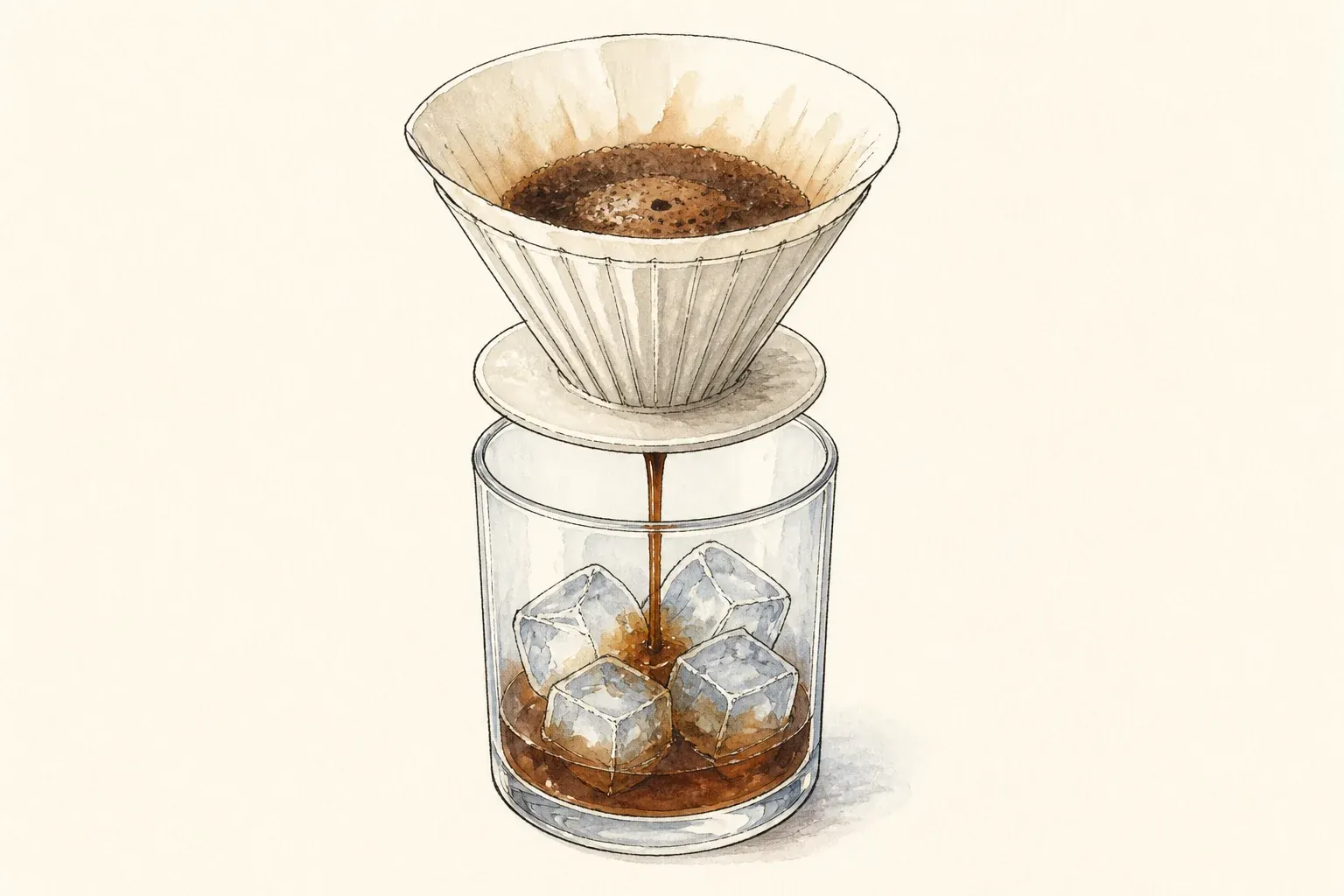
Iced coffee
- Extract hot. Brew with hot water.
- Chill. Use ice during or after brewing, or cool the coffee later.
- Serve. Count melted ice when judging the final concentration.
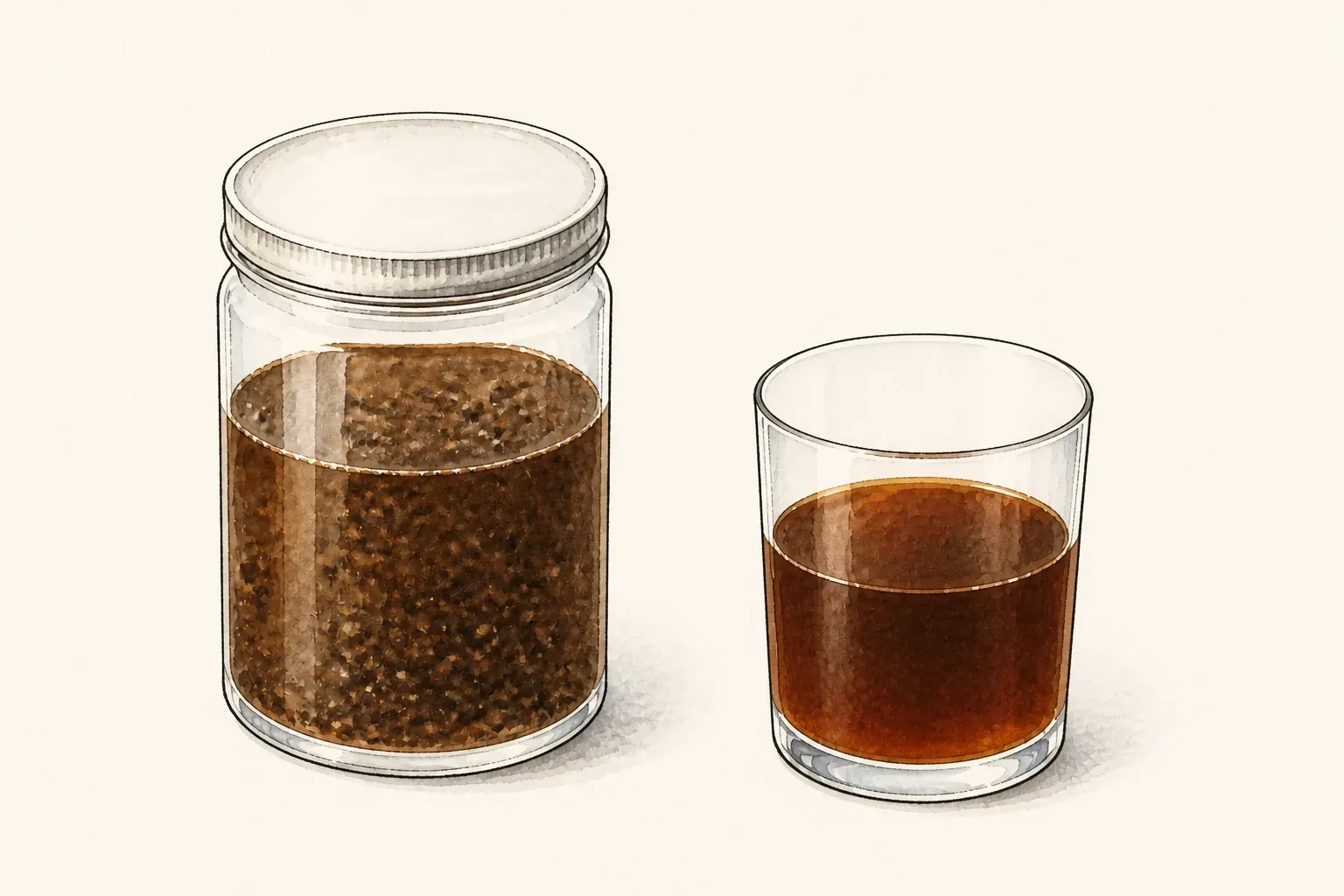
Cold brew
- Extract cool. Immerse coffee in cool water.
- Wait and filter. Contact time is measured in hours, then grounds are removed.
- Serve or dilute. A concentrate needs a declared dilution before comparison.
What actually makes one cup stronger
More coffee and less water make a more concentrated drink. Ice counts as water once it melts, and a bottle of cold-brew concentrate is not ready to compare until it has been diluted.
The coffee-to-water ratio guide and calculator can size the coffee and steeping water. Keep any later ice or dilution separate from that starting ratio.
- For stronger flavor: use more coffee for the final amount of water.
- For more caffeine: use more coffee, or choose a larger serving with a known caffeine amount.
- For a fair comparison: use the same coffee dose and finish both drinks at the same size.
Grind, brew time, and bean choice still change how much gets extracted, especially in cold brew (Cordoba et al., 2019).
What they usually taste like
Cold brew usually tastes rounder and less sharp. Iced coffee keeps more of the bright, bitter, and acidic character of hot-brewed coffee. The bean and roast still make a bigger difference than the method.
That pattern appears in a controlled tasting study: colder brews were slightly more floral and less bitter and sour, while origin and roast created larger changes (Batali et al., 2022). The study compared immersion brews rather than a normal pour-over onto ice, so use the result as a shopping guide, not a flavor guarantee.
Cold brew can taste less acidic without having a dramatically different pH. In a six-coffee comparison, hot and cold brews had similar pH, while the hot brews contained more acids overall (Rao and Fuller, 2018). That study did not test stomach comfort, so it cannot tell you which drink will feel gentler.
Cold brew can have more caffeine, but the recipe decides
Cold brew’s caffeine reputation comes mostly from recipes that use more coffee or produce a concentrate. In one same-ratio laboratory comparison, a 24-hour coarse-ground cold brew measured 1,230 mg of caffeine per liter versus 970 mg/L for its hot-brewed match. That is about 27% more before any dilution (Fuller and Rao, 2017). It was one coffee at a strong 1:10 ratio, not a rule for every glass.
Another controlled study found similar caffeine concentrations in its hot and cold brews (Rao, Fuller, and Grim, 2020). For a useful answer, compare the finished serving: the coffee dose sets the potential caffeine, while water and ice change how concentrated it tastes.
Practical rule: More coffee in the recipe creates the potential for more caffeine. Water and ice change concentration, not the caffeine already extracted.
Taste them side by side at home
This side-by-side recipe keeps the bean, coffee dose, total water, final drink size, and serving temperature the same. It lets you taste the difference between the methods instead of accidentally comparing two different strengths.
Hot extraction over ice
- Weigh 25 g coffee, 250 g hot brew water, and 150 g ice.
- Brew through a paper filter directly onto the ice. The V60 guide gives a pour sequence, but its calculator assumes all water is hot and does not account for this ice split.
- Let any remaining ice melt, then weigh the liquid.
- Add only enough cold water to reach 350 g, or reserve any excess.
Cold immersion
- Immerse 25 g coarsely ground coffee in 400 g cold water.
- Steep in the refrigerator for 12-16 hours.
- Paper-filter the brew, then weigh the liquid.
- Add only enough cold water to reach 350 g. Treat this as ready to drink, not as concentrate.
Taste both before adding milk or sweetener. If one tastes watery or harsh, adjust that recipe on the next batch. The useful result is which drink you prefer, not a laboratory verdict.